
History of Salobreña
Prehistory (approx. 1,400,000–800 BCE)
The Paleolithic period (1.4 million years ago (Orce and Atapuerca)–5,500 BC, approx.) is the first stage of prehistory. It is defined by a hunter-gatherer subsistence model based on vegetables and the manufacture of carved stone tools. In Salobreña, in the Oñate ravine, artifacts have been found that date back to the Middle Paleolithic (more than 40,000 years ago) and the Upper Paleolithic (more than 30,000–20,000 years ago).
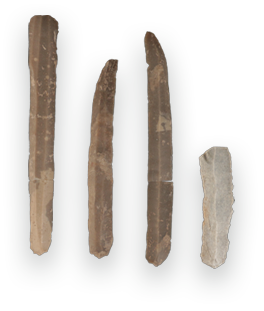
The Neolithic period (5,500–3,000 BCE) marks the beginning of regular settlement in Salobreña and along the coast of Granada. It is characterized by the transition from a hunter-gatherer lifestyle to a productive way of life based on agriculture and livestock farming. Four areas of occupation of the territory have been proposed around the main rivers and ravines. Each area must have included at least one open-air settlement, several burial caves or caves for occasional occupation, and some fishing and shellfish gathering sites. The area corresponding to the Lower Guadalfeo would be a good example of this settlement model.
During the Copper Age or Chalcolithic period (3,000–2,000 BC), we see occupation of the territory by a network of small farming and livestock-raising settlements located on hillsides near the Guadalfeo River, some of which were fortified, revealing the first signs of social inequality. In some of them, there are signs of metallurgical work, located in strategic places for the control of the territory and the main communication routes.
The Bronze Age was a complex period. During the Early Bronze Age (Argaric) (2000–1500 BC), the Lower Guadalfeo was part of the western coast of the El Argar culture, a period characterized by chiefdoms and social hierarchy. The Late Bronze Age (1500–1200 BC) seems to be a less well-known period prior to the Final Bronze Age (1200–800 BC). From then on, there was a general continuity in the economy, as well as a concentration of the population in the two most important enclaves on the coast of Granada: the maritime promontories of Salobreña and Almuñécar. This last period marks the end of prehistory and the indigenous substratum on which Phoenician colonization would take place.
Protohistory and Romanization (1,200/8–27 BCE)
This was a period of great historical change, ranging from the indigenous world of the early Iron Age, heir to the last period of prehistory: the Late Bronze Age, to the first centuries of Romanization and the change of era. The indigenous world of the early Iron Age witnessed the arrival of the Phoenician colonizers and a process of colonization (9th–6th centuries). Phoenician colonies and trading posts were established on the Mediterranean and Atlantic coasts of southern Iberia, establishing trade with the indigenous settlements inland. The arrival of multiple innovations in all areas led to a process of orientalisation of the indigenous culture that had just emerged from prehistory.
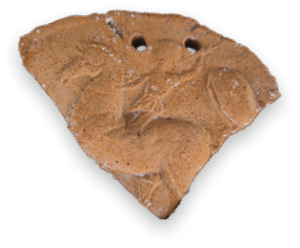
From the 6th century onwards, we witnessed the end of the Phoenician colonial era and the establishment of Punic city-states, some of which were heirs to the ancient Phoenician colonies, grouped together in the so-called “Circle of the Strait” around Gadir (Cadiz). This period lasted until the end of the 3rd century BCE and ran parallel to the development of Iberian culture further inland. The Punic period culminated with the arrival of the Carthaginians, who occupied the Andalusian and Levantine regions.
Carthaginian expansionism clashed with the interests of Rome, leading to the Second Punic War, which culminated in the defeat of the Carthaginians, their abandonment of Iberia, and the Roman occupation. From then on, the conquest and Romanization (2nd–1st centuries BCE) of what would now constitute a new Roman province began: Hispania.
Roman Empire (27 BCE–476 CE)
With the rise to power of Augustus (27 BCE) and the beginning of the Roman Empire, a series of administrative, socio-economic and cultural changes took place, aimed at the complete Romanisation of all the provinces of Rome. Baetica and, specifically, the Conventus Gaditanus, which included the coast of Granada, were areas of early and intense Romanisation. On the coast of Granada, written sources only mention the existence of one city: Sexi Firmum Iulium (Almuñécar), built around a large Phoenician salting factory. In addition, there is evidence of the existence of certain smaller settlements such as Sel/Selambina (Salobreña), which were probably villages or hamlets.
The case of Sel/Selambina, mentioned by Pliny and Ptolemy, is almost unknown archaeologically, although we have certain data on its surroundings that allow us to deduce its real existence as a probable centre for the organisation of immediate production and its export from its ports or jetties. Throughout the territory, a network of agricultural villages, potteries, jetties, salting factories, salt flats, etc. was established, which were mainly oriented towards the production of salted fish, wine, oil and ceramics.
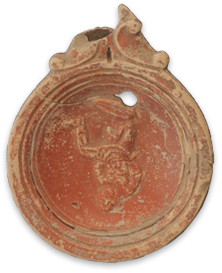
This productive network does not seem to have been greatly affected by the so-called ‘crisis of the third century’, judging by the continuity of activity in many of the pottery workshops and the presence of archaeological remains in places such as El Peñón de Salobreña, where coins from the fourth century have been found, as well as burials and other archaeological remains dating back to the 5th century. At the beginning of the 4th century, a significant event took place that demonstrated the Christianisation of the Empire in Hispania: the Council of Iliberis (Granada), which brought together representatives from 45 Christian communities throughout Hispania, including Silvanus of Segalvina (Salobreña).
Middle Age (476/711–1492)
In the early days of the Andalusian period, Salobreña was not considered to be a significant urban centre. At that time, it was referred to as a port, within the framework of the new commercial relations and communications between al-Andalus and the Maghreb. This was confirmed by al-Bakri in the 11th century. Subsequently, various Arab authors assigned it different categories, such as hisn (fortress) or qarya (farmstead).
It was during the Nasrid Sultanate (mid-13th to 15th centuries) that Salobreña was unanimously granted the status of city (madina), constituting a population centre with all the elements of an Islamic city. This was facilitated by the settlement of members of the Nasrid royal family in its citadel, which was also used occasionally as a royal prison. This is how Salawbinya ended up consolidating various elements typical of Islamic urban planning: a palatine fortress, a main mosque (masyid al-yama’a), baths (hammam), a walled enclosure, port infrastructure, a cemetery (maqbara), etc.
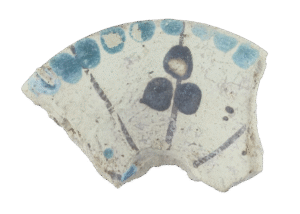
The Castilian military occupation took place at the end of the 15th century (1489–1490). From that moment on, especially as a result of and in response to the failed attempt by Boabdil’s troops to recover the enclave in August 1490, the Muslim population was forced to leave the city, which was occupied only by Castilian military contingents who set up headquarters in the fortress from which they intended to rule the newly conquered territory.
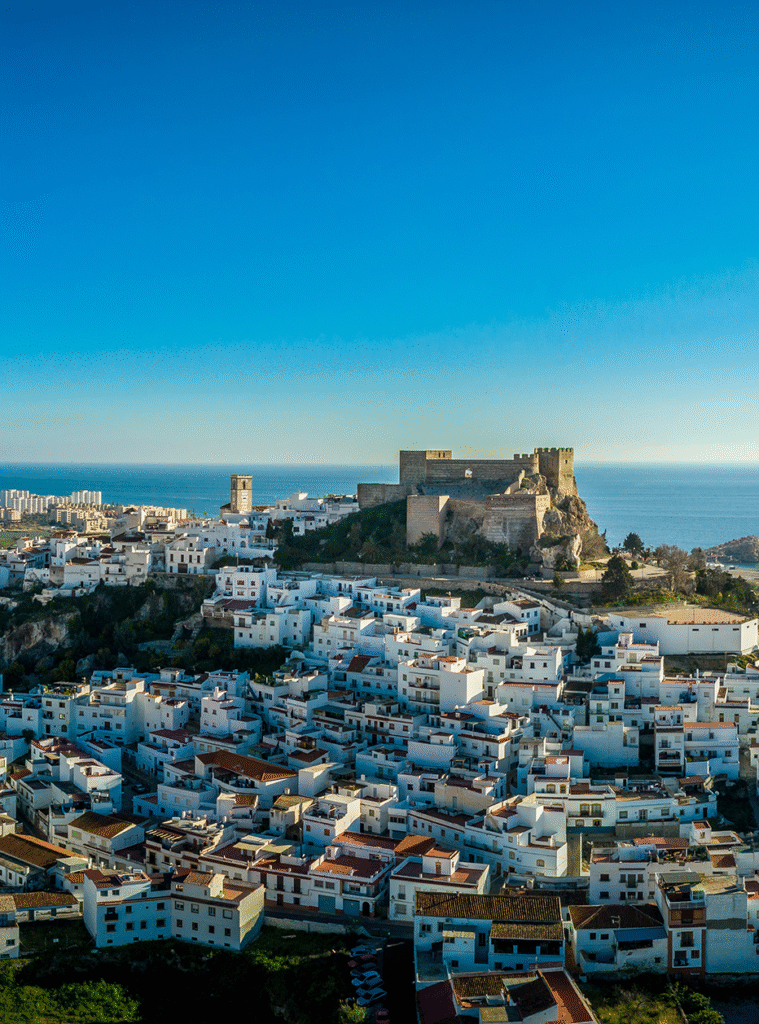
Salobreña at present