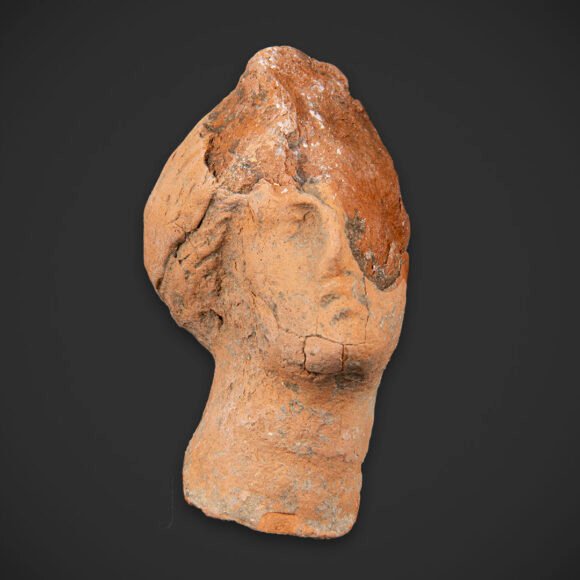
Terracotta heads and censer

Terracotta heads and censer

Manufacture: modelled fired clay.Place of origin: Peñón de Salobreña.Function: probably religious.Culture and chronology: Roman-Hellenistic (late 3rd century–mid 1st century BCE)(1): Representation of a small head of a deity measuring 7.3 × 5.6 cm. The face is rounded, in the Hellenistic style, characterised by a small mouth, rounded chin, straight nose and eyes suggested by the...

November 5, 2025November 5, 2025
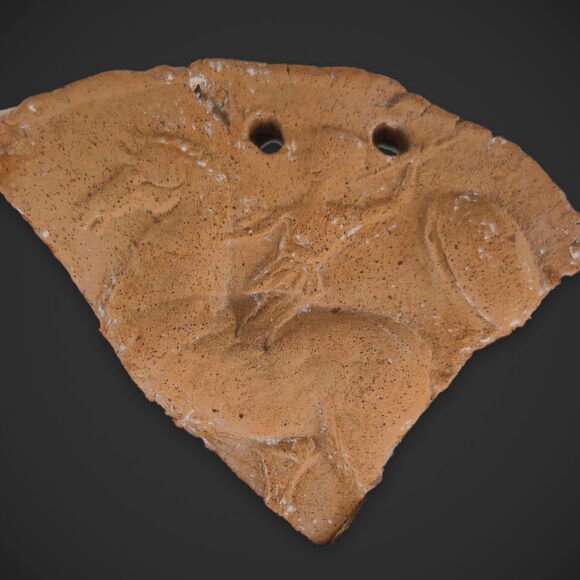
Terracotta disc with bas-relief of a horseman

Terracotta disc with bas-relief of a horseman

Description: Fragmented disc, of which approximately two-thirds has been lost. Its reconstructed dimensions would be 10.5 cm in diameter. The piece is decorated with a bas-relief depicting a horseman riding a horse and raising a spear. The figure is wearing a short tunic fastened with a wide belt and a Montefortino-type helmet covering his head....

November 5, 2025November 5, 2025
African oil lamp

African oil lamp

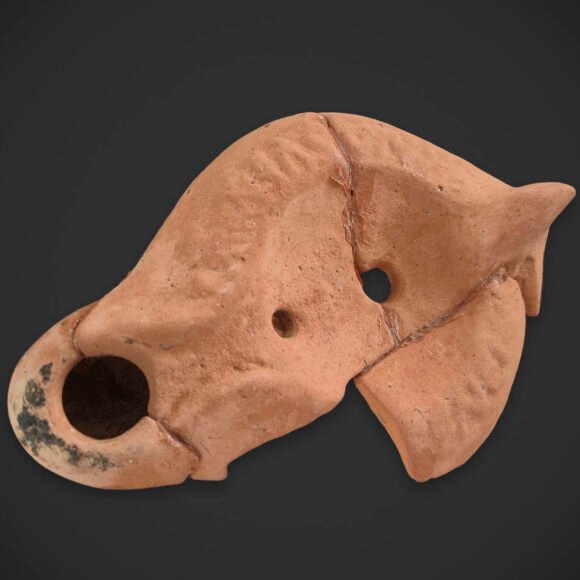
Description: oil lamp or lantern. 10.7 × 7.8 × 3.5 cm. Rounded body with a small, solid rounded handle. The top of the piece has a concave, smooth disc with a fuel hole and a smaller ventilation hole (oculus). The spout (rostrum) is of medium length, with an open, curved channel and a mixus (lighting...

November 5, 2025November 5, 2025
Roman mill

Roman mill

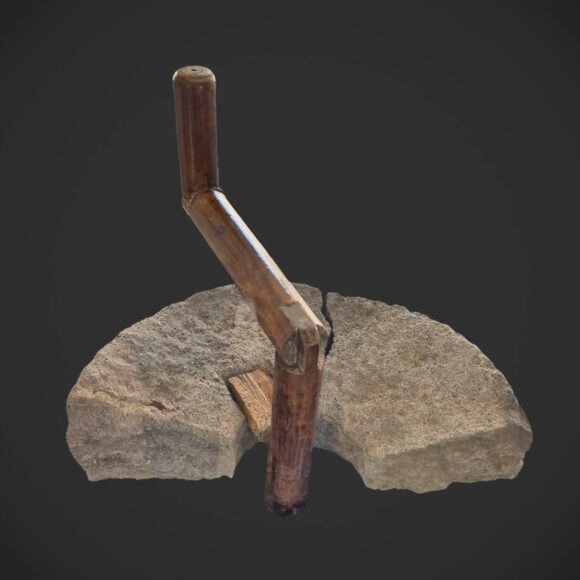
Description: fragment of the upper part of a manual rotary mill (mola). 44 cm in diameter, 12 cm thick on the outside and 7 cm thick on the inside. There is a rectangular recess for inserting a wooden crank to facilitate turning. They consisted of an upper part (catilus) that rotated on top of a...

November 5, 2025November 5, 2025
Stilus or Roman pencil

Stilus or Roman pencil

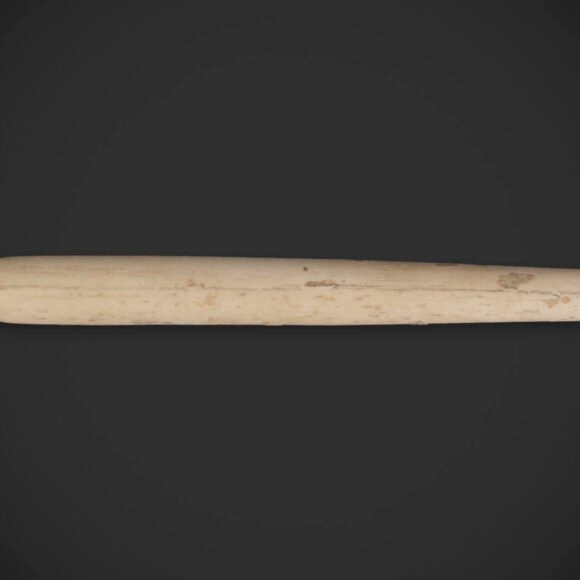
Description: stylus, stylus or Roman pencil. It is elongated, with a cylindrical-conical section that increases slightly towards the tip, where it tapers to a point. 8.3 × 0.8 cm.Manufacture: Made of bone, probably using the double-grooving technique.Function: the stylus was normally used to write on wooden tablets coated with beeswax (tabulae ceratae). The instrument usually...

November 5, 2025November 5, 2025
Nasrid jar

Nasrid jar

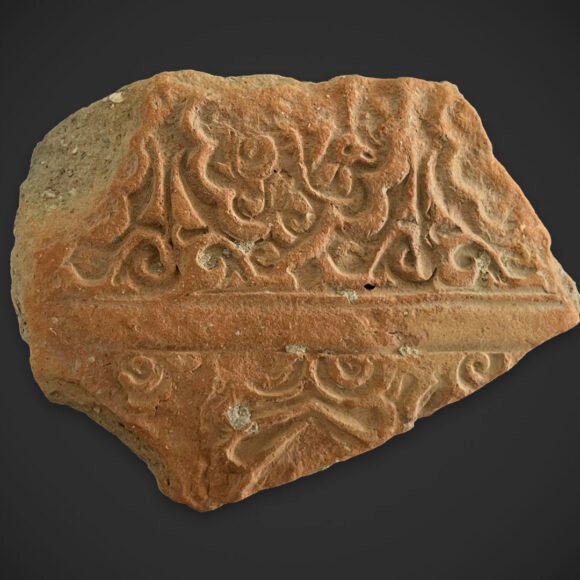
Description: fragment of a jar with a globular body and thick walls, with two small mouldings on the outside. Belly diameter of 30 cm and a maximum preserved height of 70 cm.Manufacture: wheel-thrown. It has stamped decoration on the outside, with plant and zoomorphic motifs framed by trefoil arches.Function: Storage of liquids (oil, water) and...

October 13, 2025November 5, 2025